

Some of the articles on Casa Diem Life may contain affiliate links. If you click and make a purchase, I might earn a small commission at no extra cost to you. It's just one way we keep the journey going! Find out more in my Privacy Policy.
You made it through the Christmas rush. Hopefully, you found some magic for yourself along the way as you made the holidays happen for everyone else. If you feel like you got run over, save my guide, “Host The Holidays Without The Burnout,” for next year. *wink*
This week, we’re leaning into ease. Please don’t buy the hype that you have to set intentions and start the new year with BIG energy and LOUD intentions. Let’s do this gently. Instead of rushing into decluttering marathons, many cultures approach the New Year’s reset and cleaning rituals as meaningful transitions. And there’s a lot we can learn from that.
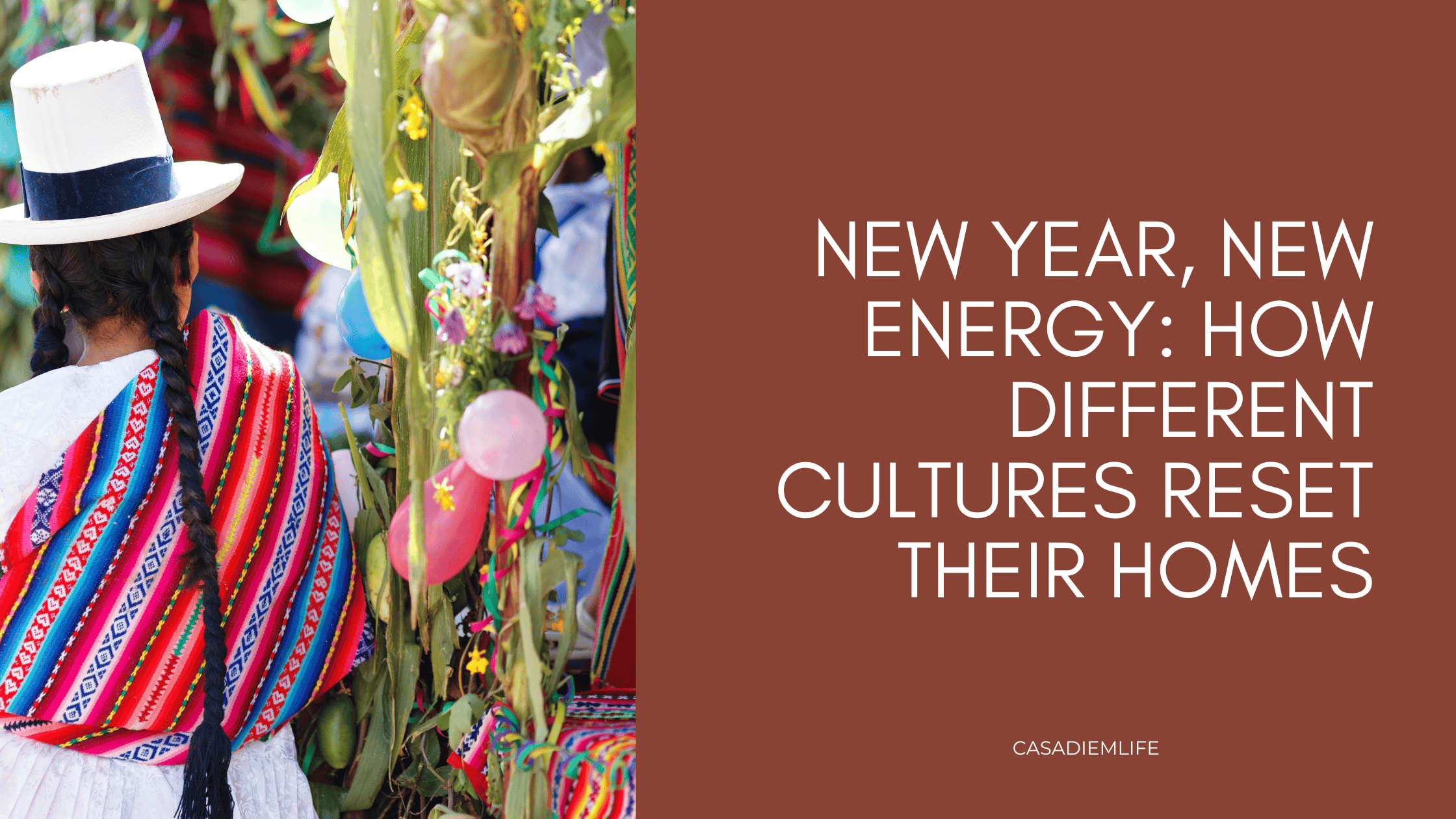
How Cultures Around the World Reset Their Homes for the New Year
Many people see the new year reset as a time to scrub everything, make vision boards, and clear out bad energy. There are certainly merits to this approach.
In many places, New Year cleaning rituals involve focused, symbolic actions rather than overwhelming tasks.
Attention is given to the spaces that carry energy and memory: entryways, kitchens, and places of rest. This kind of New Year home reset isn’t about doing more. It’s about doing what matters.
Japan: Osoji – A Ritual of Clearing the Year
In Japan, the year-end tradition of ōsōji – which translates loosely to “big cleaning” – is less about decluttering and more about closing a chapter with care. It’s typically done in late December, before the New Year begins, and focuses on removing the physical residue of the year rather than evaluating what to keep or toss.
Unlike modern decluttering, which asks you to make decisions about your belongings, ōsōji begins with cleaning what already exists. Attention is given to overlooked areas like windows, doors, walls, and light fixtures. These are places that quietly hold the story of daily life. The act is intentional and unhurried, often done together as a household, with the understanding that cleaning is a gesture of respect for the space that supported you all year.
The goal isn’t minimalism or organization; it’s completion. By clearing away dust, buildup, and stagnation, the home is prepared to welcome the New Year with openness and ease, unburdened by what belongs to the past.
Design translation:
Rather than reorganizing entire rooms, choose one surface to clear completely. A console table, a kitchen counter, or a nightstand. I often use a simple catchall tray like this one to keep only what truly belongs there.
This approach makes a New Year home reset feel intentional instead of overwhelming. There is no pressure to put value on things, only to place things where they serve you best.
Scandinavia: Light, Warmth, and Recovery
In Scandinavian cultures, the New Year reset is about restoring comfort. Long winters shape a home philosophy that prioritizes light, warmth, and softness using candles, layered textiles, and gentle lighting to help the body recover from the season.
Rather than pushing for productivity, the home is reset to support calm and resilience. It’s a reminder that sometimes the most powerful way to refresh a space is not by removing more, but by softening what you already own.
Design translation:
Reset your home after the holidays. Refluff pillows, vacuum mattresses and rugs, and clear surfaces. This is a great time to put things back where they belong or find homes for your possessions so that they’re ready to serve you when needed.
Also, add warmth. A soft throw blanket, a low table lamp, or unscented candles on ornate holders can completely shift how a space feels without a complete overhaul.

West African Traditions: Preparing for Community
Across many West African cultures, preparing the home for the New Year is closely tied to community and continuity. Cleaning and organizing are often collective acts centered around shared spaces where people gather, eat, and connect.
The focus isn’t on private perfection, but on readiness. It’s a time to clear pathways, refresh communal areas, and ensure the home can comfortably host others. The reset is outward-facing, rooted in the belief that a well-prepared home strengthens relationships as much as it supports those who live within it.
Design translation:
Reset living and dining areas first. Anchor the room with one shared piece, like a serving tray or a long, natural table runner. These elements signal hospitality without clutter.
Mediterranean Cultures: Thresholds and Flow
In Mediterranean cultures, New Year preparation often centers on movement and transition. Doors, windows, and entryways receive special attention, symbolizing the passage from one season into the next.
Homes are aired out, light is welcomed in, and thresholds are refreshed to encourage physical and symbolic circulation. Rather than overhauling interiors, the focus is on how energy enters and moves through a space, reinforcing the idea that a reset begins at the edges of the home.
Design translation:
Focus your reset on the entryway. Adding a small mirror, a grounding scent from an oil diffuser, or a simple bowl for keys can transform how your home welcomes you back each day.
Latin American Traditions: Color and Intention
In many Latin American traditions, the New Year is marked by symbolic gestures, often expressed through color and meaningful objects. Rather than neutralizing a space, intention is layered into it using select hues or elements to represent abundance, renewal, or love.
The emphasis is subtle and purposeful. One thoughtful addition can shift the emotional tone of a room, serving as a visual reminder of what you’re calling in for the year ahead.
Design translation:
Introduce one intentional color through a textile like a throw pillow or lightweight blanket. Keep it subtle and repeat the color in different rooms. And this doesn’t have to be done in one week. You can spend the year slowly weaving your chosen color throughout your home as you continue to ground your intentions.
A thoughtful color choice can shift the energy of the New Year in the home without overwhelming the space.
Designing for the Year You’re Entering
As you approach the new year, ask gentler questions:
- Where do I need more ease?
- Where do I gather—and where do I rest?
- What would support look like in this season of life?
If you want to reset your home for the New Year without burning out, try this:
Clear one meaningful space. Clean it slowly, with intention, and add one element that reflects how you want the year to feel. This kind of intentional home reset doesn’t demand energy; it restores it.
The new year doesn’t need to arrive loudly. Sometimes, the most powerful way to start the New Year is gently. And once you’ve set an intention for the year, you can find inspiration from Five Global Morning Rituals to start your days off right.
What’s one space you’re preparing—not perfecting—for the year ahead?
Feeling inspired? Pin it for later!

Want the 'how' after the inspiration?
The WanderHome newsletter is where you'll find more in-depth guides, design notes, and a few life updates to help daily life feel a little softer.
I'll send my Home Health Checklist to help you pinpoint what already works and what's quietly causing you stress in your home.

Hi, I’m Chioma — a spirited explorer and interior designer with a soft spot for a full table. I help travel-lovers bring that vacation feeling home through travel-inspired design, simple hosting rituals, and storytelling that makes daily life feel richer. Read more…