

Some of the articles on Casa Diem Life may contain affiliate links. If you click and make a purchase, I might earn a small commission at no extra cost to you. It's just one way we keep the journey going! Find out more in my Privacy Policy.
10 Global Decor Mistakes That Make Homes Look Themed (and How to Fix Them)
Global decor mistakes often happen when a travel-inspired look turns into an “airport gift shop.” You know it: a room that feels like it’s in costume, where souvenirs overtake style, and the space loses its unique warmth. The goal is a home that feels collected and worldly, not themed. Here are 10 global decor mistakes that make homes look staged, and how to avoid them while keeping your personality intact.
No Time To Read It All?
If your global decor is starting to feel “themed,” it’s usually because it’s too literal, too matchy, too concentrated in one spot, or too dependent on obvious symbols (maps, flags, signs, souvenirs). The fix is almost always the same: edit, mix eras and origins, spread pieces out, and choose texture + craft over motifs. Think: collected, not decorated.
Before We Start: The Difference Between “Global” and “Themed” Decor
Global decor is about subtle influence. Think texture, craft, patina, and hints of global inspiration woven into daily life.
Themed decor, on the other hand, relies on obvious symbols and matching styles that shout a destination. If your space feels more themed than collected, it’s not a matter of taste. You haven’t failed. Your space just needs a little editing and blending, like diversifying a playlist for more depth and interest.
Mistake #1: Everything Comes From the Same Place
Why it looks themed:
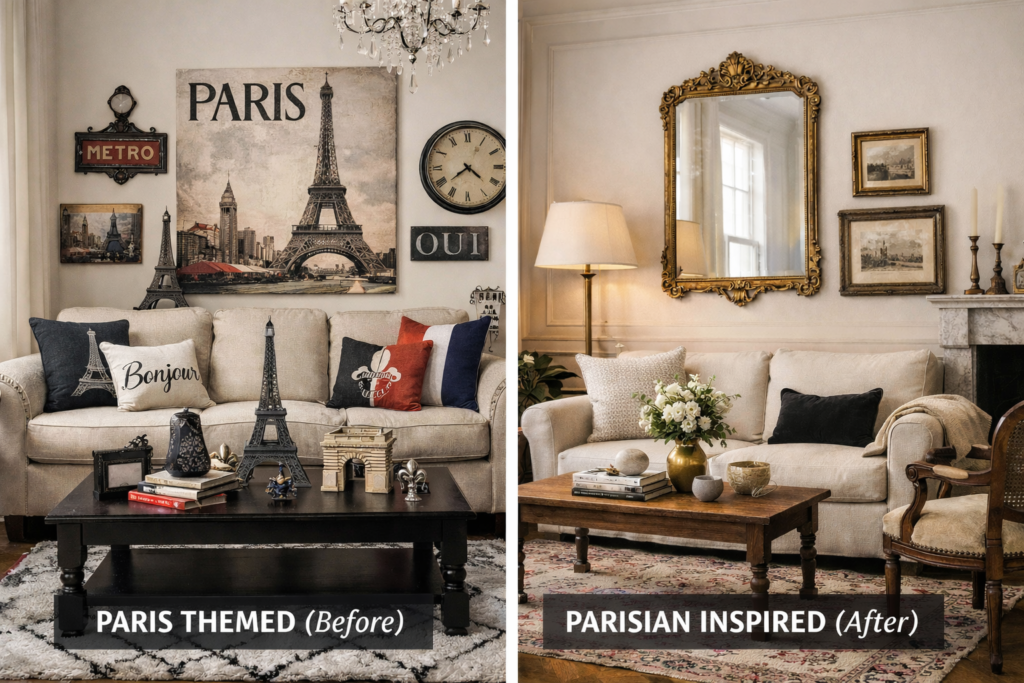
When everything in a room draws from the same place or culture, the space starts to feel staged instead of layered—and loses its sense of discovery.
The fix:
Add a “bridge” influence and a neutral piece to break up the look. For example:
– If your space feels Moroccan, introduce a vintage European frame, a modern lamp, or a simple linen sofa.
– When it skews coastal Greek, bring in a carved wood stool from a flea market or a basket with a different weave.
– If it reads “Paris,” incorporate earthy ceramics or raw wood elements.
Aim for a room that feels collected over time, not like a themed set. If you can instantly name the country, it’s time to mix things up.
Mistake #2: Too Many Obvious Motifs
Why it looks themed:
Symbols like maps, flags, and words are loud. A few can feel charming. A lot starts to feel like a travel agency wall calendar.
The fix:
Swap motif for material. Instead of map prints, choose signs with city names or flag colors; woven textiles, carved wood, natural materials, and abstract art that evoke landscapes.
If you really do love maps (like I do), make it subtle. Opt for one antique map in a classic frame, not three modern prints shouting “WANDERLUST.”
Mistake #3: The “Souvenir Shelf” (Everything Lined Up Like a Museum Display)
Why it looks themed:
When all your travel items live together, they become a collection about travel rather than a home shaped by travel.
The fix:
Disperse your pieces like seasoning, not garnish.
- Put the tiny bowl from Mexico in the bathroom for jewelry.
- Use the woven tray from Ghana as an everyday catchall in the entry.
- Hang the textile you bought in Jordan as art, not a folded souvenir.
If everything “special” is in one place, nothing feels important.
Mistake #4: Matching Sets That Look Newly Purchased
Why it looks themed:
When textiles, pillows, baskets, and wall art all match perfectly, the room feels styled in one shopping trip. This removes the element of time in decor.
The fix:
Break up the set and add in time. The secret sauce is contrast.
- Replace two matching pillows with one pillow + one solid linen cushion.
- Add something imperfect: a vintage piece, handmade pottery, a worn book stack.
- Mix one modern element into the global mix (a clean-lined lamp, a minimal side table).
Mistake #5: Overloading One Room With “Global” Everything
Why it looks themed:
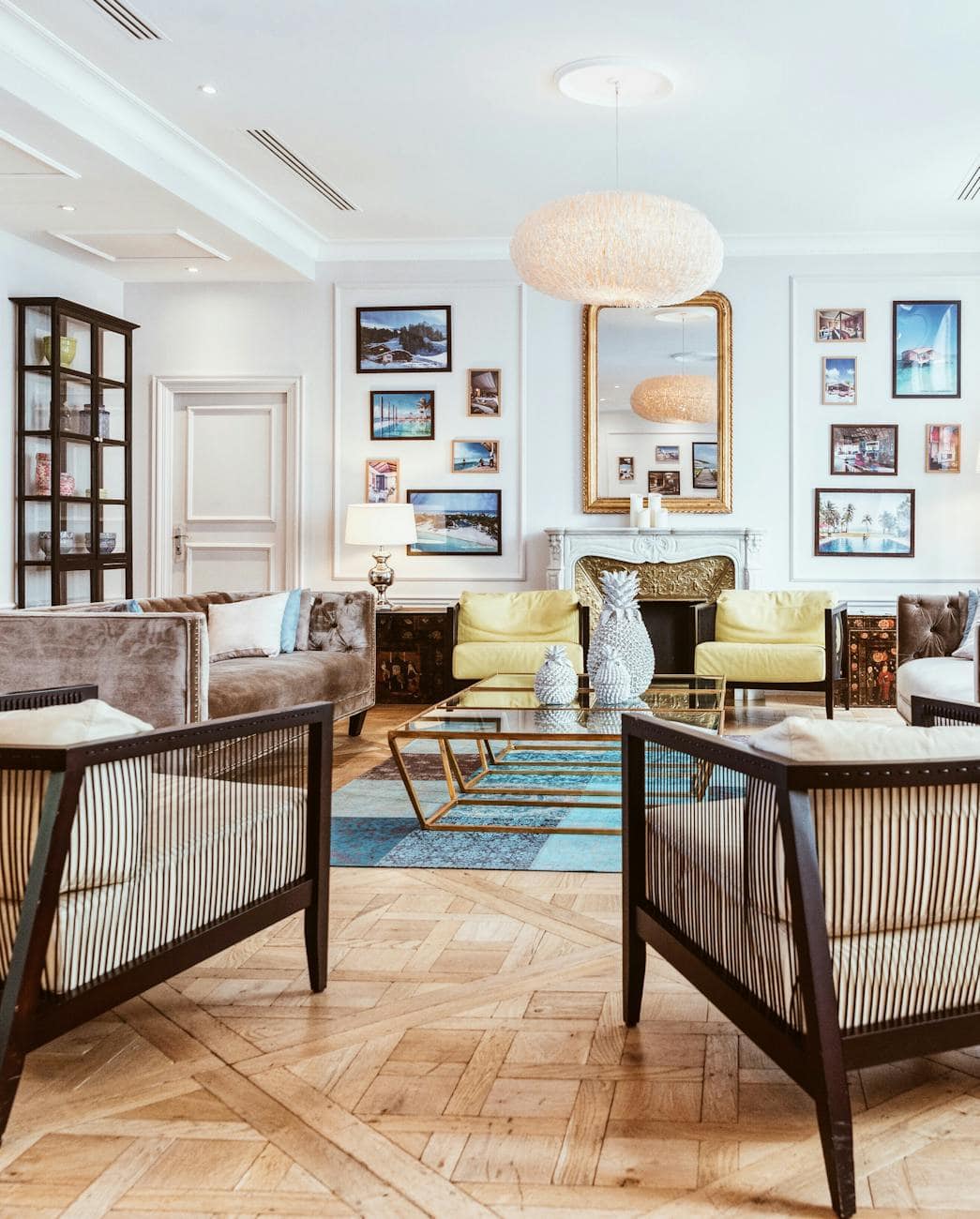
When every single object is making a statement, the room reads like an exhibit.
The fix:
Create negative space on purpose.
- Pick two global hero pieces per room (three, if you’re a maximalist). For example:
- one rug + one piece of art
- or one textile + one sculptural object
- Let everything else be calm: warm neutrals, simple silhouettes, quiet lighting.
Global decor needs breathing room to feel elevated.
Mistake #6: “Inspired-By” Pieces That Look Mass-Produced
Why it looks themed:
When the “global” objects are clearly manufactured in an offshore factory to imitate craft, the room looks inauthentic.
The fix:
You don’t need expensive pieces; you need honest ones. When shopping for decor (because we don’t shop for souvenirs here), look for handmade imperfections, natural dyes or irregular patterns, visible texture and weight, vintage items with patina, or pieces from artisans or reputable fair-trade sources.
Buy fewer items, but make them tactile. A single heavy ceramic bowl beats six lightweight knick-knacks.
Mistake #7: Too Many Small Pieces
Why it looks themed:
Tiny decor can quickly multiply visual noise, and your room will start to look like a souvenir shop shelf fast.
The fix:
Scale up and edit down. Keep one meaningful small item per surface and replace the rest with one larger anchor: a tall vase, a large bowl, a big framed photo, or a substantial basket.
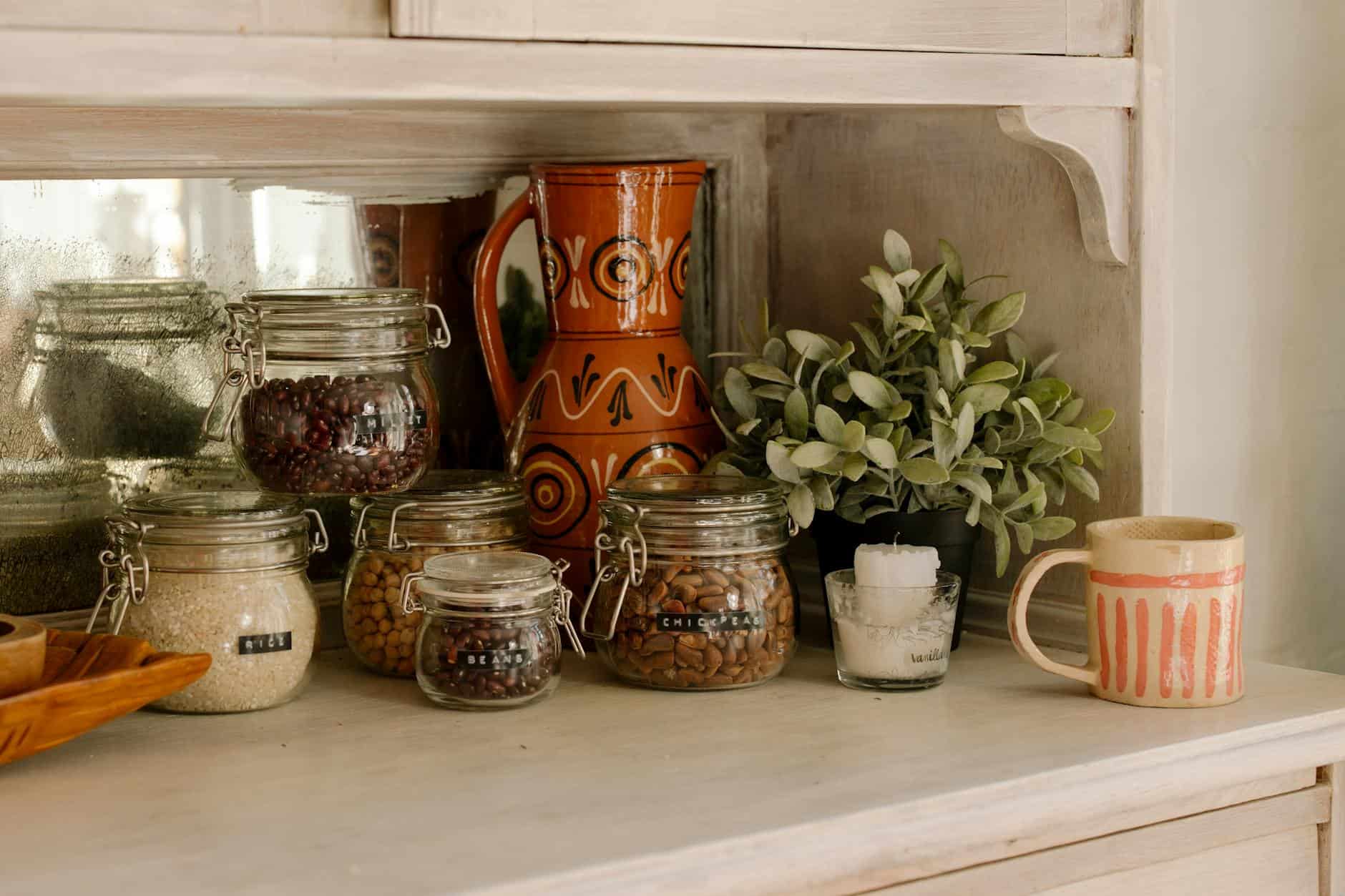
My go-to formula for shelf styling is: 1 large anchor + 1 medium support + 1 small personal object. Simplicity is the key to style.
Mistake #8: “Cultural Corners” That Feel Like a Movie Set
Why it looks themed:
When a corner is labeled as “the Bali corner” or “Moroccan nook,” it risks feeling staged and clichéd, especially if it relies on stereotypes rather than authenticity.
The fix:
Let function lead the design. Instead of a themed label, create a genuinely useful space:
– A cozy reading nook layered with a beautiful textile
– A tea ritual station with handmade cups
– A meditation spot featuring natural materials and soft lighting
If your corner serves a purpose, it feels personal and lived-in, not performed.
Mistake #9: Loud Color Without a Cohesive Palette
Why it looks themed:
Global decor can be colorful, but without a palette strategy, it can look chaotic. Sort of like you printed every vacation photo at once.
The fix:
Choose a color story before you add more pieces. Then repeat your colors subtly across the room (pillow piping, art tones, a vase glaze, a book spine).
Try one of these:
- Earth & Ink: warm sand + clay + deep indigo + black accents
- Olive & Brass: olive + cream + warm wood + brass
- Spice Market Softened: terracotta + blush + tobacco + linen
- Coastal, Not Corny: chalky white + faded blue + natural fiber + stone
Color should whisper across the space, not shout from every corner.
Mistake #10: Your Walls Tell the Story… But Your Furniture Doesn’t
Why it looks themed:
When furniture is bland or generic, and the global decor vibe comes only from surface-level accents (pillows, prints, décor), the room looks dressed up but not truly transformed. It feels more like a set than a home.
The fix:
Let your furniture do the talking, not just the accessories. Layer global design into the core (read: heavy) pieces of your space:
– Choose a carved wood side table
– Opt for a bench with natural texture
– Pick a vintage rug with a lived-in pattern
– Go for a linen sofa instead of shiny fabric
– Add sculptural, warm lighting
When the foundation feels authentic and tactile, your space has character, and you won’t need to rely on extra décor to tell the story.
The Fix That Solves 80% of Global Decor Mistakes
If you do nothing else, Edit And Mix what you already have.
1) Edit
Remove anything that feels overly literal, overly new, too matchy, or touristy. Put it in a box for 30 days. If you miss it, reintroduce it thoughtfully.
2) Mix
In any styled space, mix at least two of each:
- something modern
- something vintage
- something handmade
- something plain
This is how you get that elusive curated feeling. Global decor isn’t about recreating a place. It’s about translating a feeling – warmth, softness, texture, rhythm – into a home that still feels like you. The moment you stop trying to “prove” the destination, your space starts to look effortlessly worldly. For ideas on how to elevate your space, read 7 Curated Global Decor Pieces to Avoid the Souvenir-Shop Look.
Tell me in the comments: which of these mistakes are you most guilty of—and which fix are you trying first?
Feeling inspired? Pin it for later!

Want the 'how' after the inspiration?
The WanderHome newsletter is where you'll find more in-depth guides, design notes, and a few life updates to help daily life feel a little softer.
I'll send my Home Health Checklist to help you pinpoint what already works and what's quietly causing you stress in your home.

Hi, I’m Chioma — a spirited explorer and interior designer with a soft spot for a full table. I help travel-lovers bring that vacation feeling home through travel-inspired design, simple hosting rituals, and storytelling that makes daily life feel richer. Read more…